Despite its terrifying name, Death Road is something that thrill seekers won’t want to miss on a trip to Bolivia. Whilst some cycling experience is helpful, it is still possible for the more novice of cyclist to complete the 64km downhill cycle and live to tell the tale.
I mean, who doesn’t want to be able to say they survived Death Road?!
So what is Death Road?
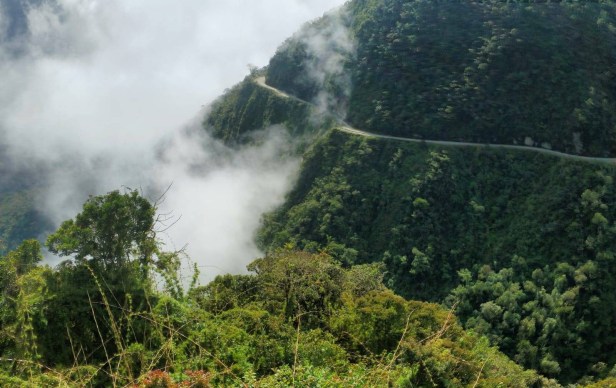
Death Road is a thin, winding and gravely path that connects La Paz to Coroico. It was named ‘the most dangerous road in the world’ in 1995, when it was estimated 200-300 people lost their lives on the road each year. Not surprising seeing as the majority of the road is just a single vehicle wide with unthinkable drops over the edge, the top part often is covered in cloud, and there are no railings! Thankfully in 2006 a new road was completed to divert vehicles away from this death trap. The road still remains open with just a few crazy drivers and cyclists using the now much safer but still adrenaline pumping road.
Our Experience on Death Road
We chose to cycle Death Road with Barracuda Biking (the sister company of Gravity) as they were recommended by some friends of ours and they seemed to strike a good balance between price and safety. We didn’t regret our decision.
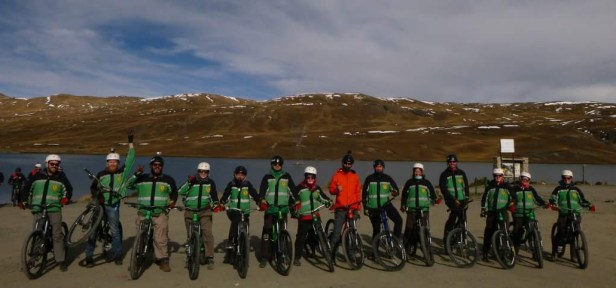
The day starts off at a ‘why is my alarm going off now’ kind of early. We met at 6.45 for a pre-cycle fuel up at Little Italy and the guides arrive at 7.30am to whisk you off to the top of Death Road, explaining the process of the day and handing out safety gear on the way. On arriving at 4,700m you are each assigned a bike (which has a name) and have a chance to cycle round and get a feel for the bike and the super reactive brakes. Of course before setting off, you must make an offering to Pachamama (Mother Earth), and beg her to keep you safe. This involves pouring pure alcohol onto the ground, your front tyre, and of course taking a swig or two. Bolivians are very superstitious so it’s best to do as you are told on this one, even if you do think it’ll burn a hole through your throat.


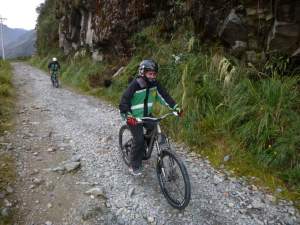
The first 20km section of road is what they call a ‘warm up’. A nicely paved road to get your confidence up a bit and get used to the bikes. There are a couple of stops along the way with some nice spots for photos- though I spent most of this time trying to warm my hands, its blooming freezing! At the end of this section you get a small taste of the rocky road that lies ahead of you, more than enough to get the adrenaline pumping. If you’ve not cycled on gravel before, believe me- its bloody hard.
I breathed a big sign of relief when they said we would get back in the van to cover the uphill part of the day. A chance to warm up, have a well needed snack and psych ourselves up for what was to come.
Before we knew it we were back on the bikes and having our final pep talk and safety briefing before tackling Death Road. I was pretty horrified to find out that cyclists are supposed to stick to the left hand side of the road (the cliff edge) should any cars need to pass. I was seriously wondering if this was a good idea after all! But off I went, keeping my grip firmly on my breaks, trying to look out for the ‘less rocky’ parts of the road where possible and totally ignoring the ‘ride on the left hand side’ instructions. Thankfully no cars decided to come up Death Road today.
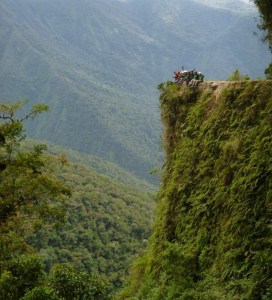
We had plenty of stops on the way to recoup and for the guides to explain the twists, turns and waterfalls of the next section of the road (very reassuring). There are some great photo opportunities on the way too and the guides are great at knowing exactly where these are as well as taking plenty of action shots. If at any time on the ride you aren’t feeling comfortable, you can hop back on the van for a little bit/ the rest of the journey. Being stubborn, this was NOT going to happen for me!
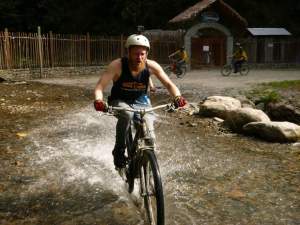
Before we knew it, it was getting a lot warmer and we were coming to the last section of death road. I was actually quite thankful of this as I was aching all over and my hands were cramped into a claw position from gripping the brakes so tight. Seriously, I don’t think I let my grip loose once. Our guides warned us to be careful as that this is where 90% of cyclist accidents happen as people become overly confident and complacent.
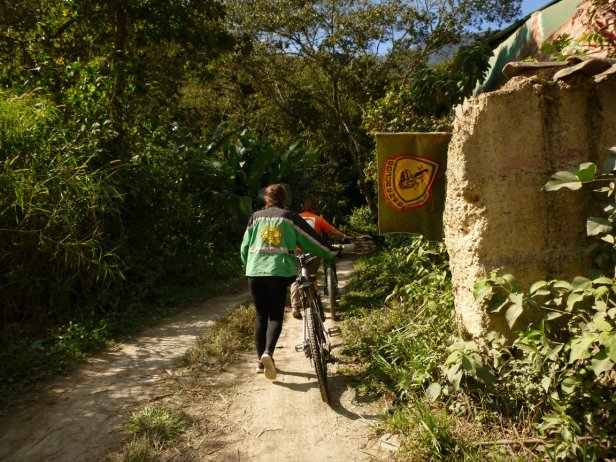
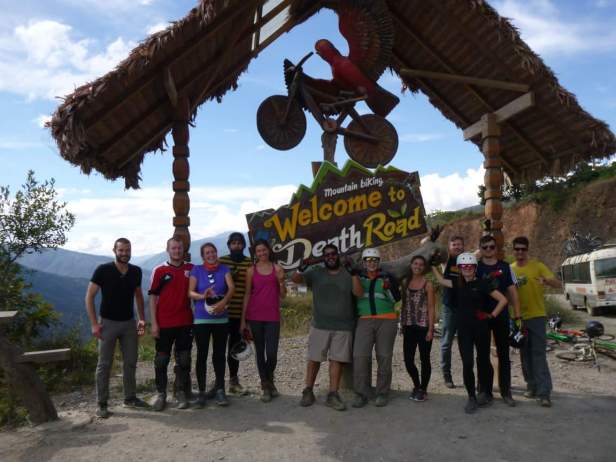
WE MADE IT: You should have seen the smiles on our faces when we saw the swimming pool at the end of our journey. The perfect way to soothe our aching muscles and freshen up after a difficult and long day of cycling. Barracuda also provided us with a tasty buffet lunch and HOT yes HOT and powerful showers before jumping back on the van to head back to La Paz, with us our t-shirts proving we made it.
Review of Barracuda
I genuinely don’t have a bad word to say about this company. They offer an awesome service with the most incredibly talented guides who I had every ounce of trust in to do their bit to keep us safe.
The bikes they use are Kono (apparently very good) with dual suspension and they service the bikes after every use. The guides really did take the time to make sure you were happy with the bike, and even changed the brakes for those who preferred them the other way round. They also had a spare bike on the van in case any of the bikes needed any spare parts during the day. All other safety equipment provided was of good quality and if you visit the office in La Paz beforehand, you can try it all on in advance to make sure they have the right sizing for you.
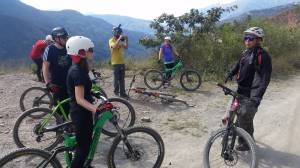
The guides were AMAZING. We had a big group of 14 but Cristian and Kenneth were always on hand when needed- we always had one guide at the front and one at the back to keep an eye on everyone. Their English was great and they always kept us informed of what was going to happen next. They took loads of photos of the group which were in our inbox by the next morning. We saw other companies with only one guide at the front, who had no clue that someone from their group was miles back with a flat tyre, or having fallen off! In my opinion, two guides per group is essential. We did have one injury on our trip and both Cristian and Kenneth reacted quickly and efficiently.
The current price to cycle death road with Barracuda Biking is 630Bs per person (dual suspension bikes), and they do offer discounts for groups. It includes all equipment and transport, English speaking guides, 2 snacks (sandwich, chocolate and coke), unlimited water, swimming pool, buffet lunch, hot shower with towel and shampoo, photos throughout the day and a death road t-shirt. It does not include 50Bs per person road tax which is enforced by the villages you pass, tips for guides and driver, or your celebratory beer at the end.
To book, you can visit their website (http://www.barracudabiking.com/en/), email them on info@barracudabiking.com, or visit their office in La Paz.
Our top tips for surviving Death Road:
Do: make sure to have a good breakfast before you leave. You’ll need all the energy you can get.
Do: dress like an onion. At the top its freezing, at the bottom you’ll be happy to de-layer.
Do: Listen to the guides when they are explaining the road layout ahead of you, its really important for your safety.
Don’t: Get over-confident. They aren’t lying when they say it is dangerous. One guy from our group fell and dislocated his shoulder!
Don’t: Go out drinking the night before. You need all your whits about you and a strong stomach given how rocky the roads are.
Have you cycled death road before? Is it on your bucket list? We would love to hear from you 🙂
 Couple of Explorers